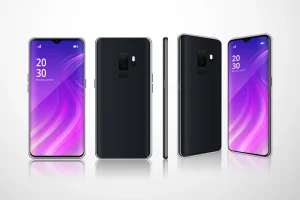
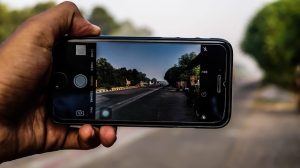
An LTPO Display helps a device balance smooth performance with power efficiency. Instead of running at a high refresh rate all the time, the screen can adjust its refresh rate based on what’s happening.
If you’ve ever used a modern smartphone with a 120Hz display, you’ve probably noticed how smooth scrolling feels. But keeping a screen at a high refresh rate all the time can use more power. This is where LTPO Display technology becomes useful.
LTPO allows compatible OLED screens to change their refresh rate depending on what you’re doing. The screen can run at a high refresh rate when you are scrolling or playing a game, then slow down when you’re reading a page or looking at a still image.
What Is an LTPO Display?
LTPO stands for Low-Temperature Polycrystalline Oxide. It is a type of thin-film transistor (TFT) technology used in OLED displays.
You don’t need to understand the electronics behind it to understand the main benefit. LTPO helps the display control its refresh rate more flexibly, making it possible to switch between different refresh rates instead of staying at one fixed rate.
The exact refresh-rate range depends on the display panel and device. Some LTPO panels can reduce the refresh rate to very low levels when the screen content barely changes.
How Does Variable Refresh Rate Work?
The refresh rate tells you how many times a display updates its image each second. It is measured in hertz (Hz).
A 60Hz display refreshes 60 times per second, while a 120Hz display can refresh 120 times per second. Higher refresh rates can make scrolling, animations, and supported games feel smoother.
But you don’t always need 120Hz.
Imagine you’re reading an article on your phone. The screen content may remain almost completely still. Running the display at its highest refresh rate in that situation can be unnecessary.
With a Variable refresh rate, the display can reduce its refresh rate when little is happening and increase it again when you start scrolling or interacting with the screen.
Why Does Variable Refresh Rate Matter?
The main idea is simple: use a high refresh rate when you need it and a lower one when you don’t.
For example, your phone might use a higher refresh rate while you’re scrolling through social media. Once you stop scrolling and the screen becomes mostly static, it can lower the refresh rate.
This can help reduce the amount of power the display uses compared with continuously running at a high refresh rate. However, the actual battery savings depend on factors such as the display, brightness, software, content, and how you use the device.
LTPO vs. Fixed Refresh Rate
The difference is easiest to understand with a simple example:
-
Fixed 60Hz: The display stays at 60Hz.
-
Fixed 120Hz: The display stays at 120Hz.
-
Variable refresh rate: The display can change its refresh rate depending on the situation.
The important thing to remember is that LTPO does not automatically mean every phone behaves in exactly the same way. Manufacturers can use different panels and implement different refresh-rate ranges through hardware and software.
Where Are LTPO Displays Used?
LTPO technology is commonly associated with premium smartphones and smartwatches, where manufacturers want smooth animations without constantly running the display at a high refresh rate.
It is particularly useful for devices that spend a lot of time displaying relatively static content, such as an always-on display or a watch face. Some panels can drop to very low refresh rates in these situations.
Does LTPO Mean Better Display Quality?
Not necessarily.
LTPO mainly concerns how the display is driven, particularly its ability to adjust refresh rates efficiently. It does not automatically determine a screen’s resolution, brightness, color accuracy, or overall image quality.
Two phones can both use LTPO OLED displays while having very different specifications and visual performance.
Conclusion
An LTPO Display helps a device balance smooth performance with power efficiency. Instead of running at a high refresh rate all the time, the screen can adjust its refresh rate based on what’s happening.
That Variable refresh behavior is the real advantage. When you’re scrolling or gaming, the display can prioritize smooth motion. When you’re reading or looking at a mostly static screen, it can slow down and potentially save power.
External Sources/Links
FAQs
What does LTPO stand for?
LTPO stands for Low-Temperature Polycrystalline Oxide, a thin-film transistor backplane technology used in OLED displays.
Does LTPO save battery?
It can help reduce display power consumption by allowing the refresh rate to fall when high refresh rates are unnecessary. Actual savings depend on the device and how it is used.
Is LTPO better than 120Hz?
LTPO and 120Hz describe different things. LTPO is a display backplane technology, while 120Hz describes a refresh rate. An LTPO display can support high refresh rates while also allowing the rate to change.
Can an LTPO display run at 1Hz?
Some LTPO-based displays support refresh rates as low as 1Hz, but the minimum rate varies by panel and device. Samsung Display and BOE, for example, have documented panels supporting very low refresh rates.