An Algorithm is a structured set of steps used to solve a problem or accomplish a task. From finding a route on your phone to searching the web and processing data, algorithms quietly power many technologies you use every day.
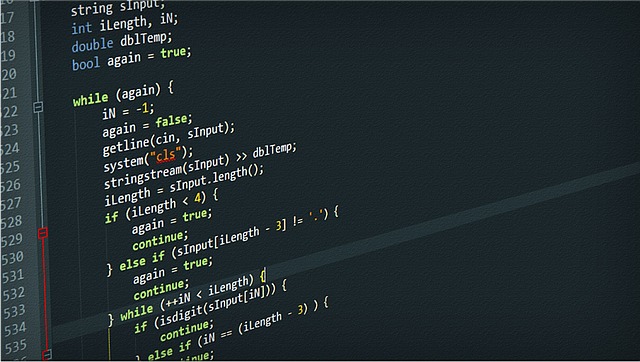
You may hear the word algorithm whenever people talk about search engines, social media, artificial intelligence, or computer programming. It can sound like a complicated technical term, but the basic idea is surprisingly simple.
An algorithm is essentially a step-by-step method for solving a problem or completing a task. Algorithms are used by computers, smartphones, websites, apps, and many other technologies to decide what to do and how to do it.
What Is an Algorithm?
For a beginner, one of the easiest ways to understand an algorithm is to think of it as a recipe.
A recipe gives you a sequence of instructions: gather ingredients, prepare them, cook them in a particular way, and serve the finished dish. An algorithm works in a similar way, except the instructions are designed to solve a problem or produce a specific result.
In computing, an algorithm takes some form of input, processes it according to defined steps, and produces an output.
For example:
Input → Instructions → Output
If you give a calculator two numbers and ask it to add them, the numbers are the input, the addition process is part of the algorithm, and the answer is the output.
How Do Algorithms Work?
An algorithm usually follows a logical sequence of steps. Depending on the problem, it may also make decisions or repeat certain steps.
Consider a simple algorithm for deciding whether to take an umbrella:
-
Check the weather forecast.
-
If rain is expected, take an umbrella.
-
If rain is not expected, leave it at home.
Real computer algorithms can be much more complex, but they follow the same basic principle: instructions are followed to produce a result.
Some algorithms also use conditions, such as “if this happens, do this; otherwise, do something else.” Others use loops, which repeat instructions until a particular condition is met.
Everyday Examples of Algorithms
You encounter algorithms more often than you might realize.
Search Engines
When you search for something online, search systems use algorithms to process your query and determine which results to display. Modern search systems consider many factors when retrieving and ranking information.
Navigation Apps
Navigation services use algorithms to calculate routes between locations. They can process information such as roads, distances, and available routes to help determine a suitable path.
Social Media Feeds
Social platforms use algorithms to determine which posts or other content to show users. These systems can consider signals such as interactions and other information about the content and user experience.
Online Shopping
Shopping websites use algorithms for tasks such as searching products, filtering results, recommending items, and managing other parts of the shopping experience.
Algorithms and Artificial Intelligence
Algorithms are also an important part of AI systems, although an AI model is not simply one traditional algorithm.
Machine-learning systems use algorithms during processes such as training, optimization, and prediction. In many modern AI systems, the underlying model learns patterns from data rather than relying only on manually written rules for every possible situation.
This distinction is important: a traditional algorithm might explicitly define a sequence of instructions, while a machine-learning system can learn parameters from examples and then use those learned parameters to generate predictions or outputs.
What Makes a Good Algorithm?
There is no single definition of a “good” algorithm for every situation. Its usefulness depends on the problem being solved.
Developers often consider factors such as:
-
Correctness: Does it produce the expected result?
-
Efficiency: How much time and computing power does it require?
-
Scalability: Can it handle larger amounts of data?
-
Reliability: Does it behave properly across different inputs?
-
Clarity: Can developers understand and maintain it?
An algorithm that works well for a small dataset may become inefficient when the amount of data grows significantly.
Why Are Algorithms Important?
Algorithms are the foundation of much of modern computing. They help computers search, sort, calculate, process data, recognize patterns, communicate information, and automate tasks.
Understanding the concept doesn’t require advanced programming knowledge. If you can understand a recipe or a set of logical instructions, you already understand the basic idea behind an algorithm.
Conclusion
An Algorithm is a structured set of steps used to solve a problem or accomplish a task. From finding a route on your phone to searching the web and processing data, algorithms quietly power many technologies you use every day.
For a beginner, the easiest way to remember the concept is simple: an algorithm is a method for turning a problem into a series of logical steps that produce a result.
External Sources/Links
FAQs
What is an algorithm in simple words?
An algorithm is a set of logical, step-by-step instructions used to solve a problem or complete a task.
Is an algorithm the same as a computer program?
No. An algorithm describes the method for solving a problem, while a computer program is an implementation of instructions written in a programming language.
Are algorithms only used in computers?
No. Algorithms can describe procedures for many kinds of tasks. Computers are particularly good at executing complex algorithms quickly and repeatedly.
Why are algorithms important in AI?
Algorithms are used in different parts of AI and machine learning, including training, optimization, data processing, and prediction.
Can an algorithm learn by itself?
A traditional algorithm generally follows predefined instructions. Machine-learning systems are different because they can adjust learned parameters based on data during training.