What is LiDAR? Learn how this laser-based sensing technology measures distance and powers smartphone features, AR experiences, robotics, and smart devices.
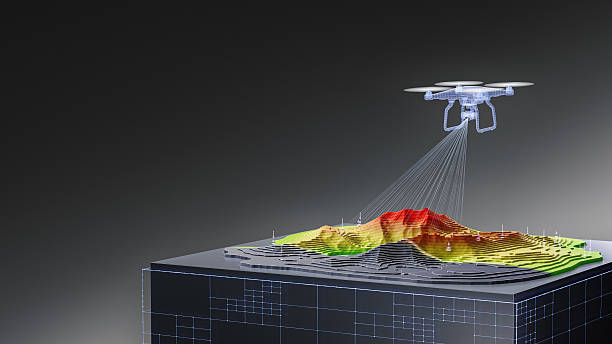
From measuring rooms with a smartphone to helping robots understand their surroundings, LiDAR is making digital devices better at sensing the physical world. The technology creates distance measurements that help devices estimate shapes, map spaces, and understand where objects are located.
But what is LiDAR, and how does it work? Although it has long been used in surveying, mapping, and industrial applications, LiDAR is now available in selected consumer devices, including smartphones, tablets, and robotic systems.
What Is LiDAR?
LiDAR stands for Light Detection and Ranging. It is a sensing technology that uses laser light to measure distances to objects and surfaces.
A LiDAR sensor emits pulses of light and measures how long they take to return after reflecting off nearby objects. By collecting many measurements, the system can build a representation of its surroundings, sometimes as a three-dimensional point cloud—a collection of points representing surfaces in space.
Unlike an ordinary camera, which records images based on visible light, LiDAR directly measures distances. Some systems combine these measurements with camera images and other sensor data to produce a more detailed understanding of an environment.
How Does LiDAR Work?
Most LiDAR systems follow a straightforward process:
- Emit light: The sensor sends laser pulses toward objects in its surroundings.
- Receive reflections: A detector captures light reflected from those surfaces.
- Measure distance: The system calculates how far away an object is using the light’s travel time.
- Build a spatial model: Multiple measurements are combined to map surfaces and estimate object positions.
For a simple time-of-flight system, distance can be calculated using the formula:
Distance = (Speed of light × Round-trip time) ÷ 2
The division by two accounts for the light traveling to the object and back. Real-world performance depends on factors such as sensor design, surface properties, ambient light, and the system’s measurement capabilities.
How Is LiDAR Used in Consumer Technology?
1. Smartphones and Tablets
Some smartphones and tablets include LiDAR sensors to improve depth sensing. Apple’s selected Pro iPhone and iPad Pro models, for example, use LiDAR scanners for supported features and applications.
These sensors can help compatible devices estimate distances, understand nearby surfaces, and improve certain camera and augmented reality experiences. However, not every smartphone has LiDAR, and many depth-related features can also work using cameras and software alone.
2. Augmented Reality (AR)
Augmented reality places digital objects within a view of the real world. LiDAR can help compatible devices estimate room geometry and detect surfaces, making it easier for virtual furniture, visualizations, or other digital objects to appear anchored in a physical space.
The results depend on the device, application, and environment. LiDAR does not automatically make every AR experience more accurate.
3. Home Measurement and Interior Design
Some measurement and interior-design apps use LiDAR data to estimate room dimensions, map surfaces, or create rough 3D models. This can be useful when planning furniture placement or visualizing changes to a room.
These measurements should not automatically be treated as professional surveying results. Accuracy varies by device, app, distance, and measurement conditions.
4. Robot Vacuums and Smart Robots
Certain robot vacuums use LiDAR-based navigation to map rooms and plan cleaning routes. The resulting spatial information can help them navigate more systematically than devices relying only on basic obstacle sensors.
Other robots use cameras, infrared sensors, ultrasonic sensors, or combinations of technologies. LiDAR is one navigation option, not a requirement for every smart robot.
What Are the Limitations of LiDAR?
LiDAR provides useful distance information, but it has limitations. Dark or reflective surfaces, bright sunlight, rain, fog, dust, and other environmental conditions can affect some sensors’ performance.
Consumer-device LiDAR also has a limited sensing range compared with many specialized surveying systems. In addition, the sensor’s output depends on software interpretation, so measurements and 3D models are not always exact.
LiDAR should therefore be viewed as one component of a sensing system rather than a complete understanding of the environment.
Conclusion
LiDAR is a laser-based technology that measures distance and helps devices build spatial representations of the world. In consumer technology, it supports selected smartphone features, augmented reality, room measurement, and robotic navigation.
As more devices combine LiDAR with cameras and software, its value lies in helping machines interpret physical spaces more effectively. Its usefulness, however, depends on the sensor, application, and conditions in which it operates.
External Sources/Links
- Apple Developer: ARKit — Official information on augmented reality technologies used in Apple devices.
- Apple: iPad Pro — Official product information for checking LiDAR availability on supported iPad Pro models.
- NASA: What Is Lidar? — An accessible explanation of LiDAR principles and its applications in mapping and Earth observation.
FAQs
1. What does LiDAR stand for?
LiDAR stands for Light Detection and Ranging. It uses laser light to measure distances and gather information about surrounding surfaces.
2. Does every smartphone have LiDAR?
No. LiDAR is available on selected smartphone and tablet models. Other devices may estimate depth using cameras and software instead.
3. Is LiDAR better than a camera?
They serve different purposes. A camera captures visual information, while LiDAR measures distance. Combining both can help a device understand its surroundings more effectively.