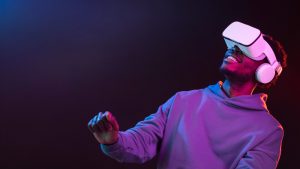
Learn what spatial computing is, how it works, and how AR, VR, mixed reality, sensors and 3D technology are changing the way we use computers.
If you have come across the term “Special Computing,” you are probably looking for spatial computing. Spatial computing is a way of using technology that connects digital content with the physical world around us.
Unlike traditional computers, which mainly rely on screens, keyboards, and mice, spatial computing allows users to interact with digital objects in three-dimensional space. It uses technologies such as cameras, sensors, computer vision, 3D graphics, motion tracking, and spatial audio to create more natural and immersive experiences.
What Is Spatial Computing?
Spatial computing is a form of computing that allows computers to understand and respond to the physical space around a user.
For example, imagine looking at a 3D model of a car that appears to be sitting in your room. You could walk around it, make it larger or smaller, and interact with it using your hands or other controls. The digital object is not simply displayed on a screen; it is positioned within your surroundings.
Spatial computing is a broad concept that includes technologies such as augmented reality (AR), virtual reality (VR), and mixed reality (MR).
How Does Spatial Computing Work?
Spatial computing combines several technologies to understand the user’s environment and movement.
-
Cameras and sensors scan the surroundings and collect information about the environment.
-
Computer vision helps devices recognize surfaces, objects, depth, and movement.
-
Spatial mapping creates a digital understanding of the surrounding physical space.
-
Motion tracking follows movements such as head, hand, or eye movements.
-
3D graphics create digital objects that can be placed within the user’s environment.
-
Spatial audio makes sounds seem to come from specific locations around the user.
Together, these technologies allow digital content to respond to the physical world and the user’s movements.
Spatial Computing vs. AR, VR and MR
Spatial computing is closely related to AR, VR, and MR, but the terms have different meanings.
Augmented reality (AR) adds digital information or objects to the real world. Virtual reality (VR) creates a completely computer-generated environment. Mixed reality (MR) allows digital and physical elements to exist and interact within the same space.
Spatial computing is the broader concept. It focuses on making computers understand and interact with three-dimensional environments.
Where Is Spatial Computing Used?
Spatial computing is being explored in many industries and everyday applications.
-
Education: Students can explore interactive 3D models and virtual environments.
-
Healthcare: Medical professionals can use 3D visualization for training and education.
-
Engineering and design: Engineers and designers can examine and manipulate digital prototypes.
-
Manufacturing: Workers can receive digital instructions or view 3D information while working.
-
Gaming: Games can respond to a player’s physical surroundings and movements.
-
Collaboration: Teams in different locations can work with shared 3D content.
These applications show why spatial computing is becoming an important area of technology development.
Why Does Spatial Computing Matter?
One of the biggest differences between spatial computing and traditional computing is context.
Most computer applications exist inside a screen. Spatial computing allows software to understand where the user is and where digital objects are located in relation to the surrounding environment.
This creates new possibilities for developers and businesses, but it also introduces new design challenges. Applications need to account for physical space, movement, depth, and new ways of interacting with digital content.
Devices such as Apple’s Vision Pro demonstrate how spatial interfaces can combine digital applications with a user’s physical surroundings.
Conclusion
Spatial computing is changing the way people can interact with computers by bringing digital content into three-dimensional environments. It combines technologies such as sensors, computer vision, 3D graphics, and motion tracking to make digital experiences more connected to the physical world.
While AR, VR, and mixed reality are important parts of the ecosystem, spatial computing is the broader idea of making computers understand and work within physical space.
If you searched for “Special Computing,” the standard technical term you are looking for is Spatial Computing.