Learn how smart homes communicate with different devices using Wi-Fi, Bluetooth, Thread, and Matter to connect lights, sensors, appliances, and more.
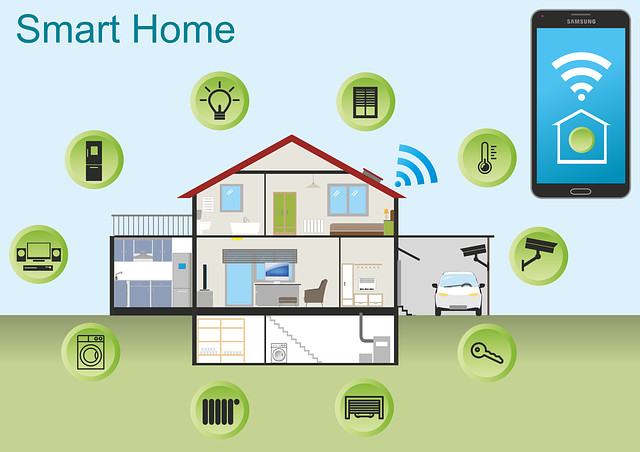
Smart homes connect everyday devices to make living spaces more convenient, efficient, and secure. From smart lights and thermostats to security cameras and voice assistants, these devices exchange information to respond to commands and automate routine tasks. Understanding how smart homes communicate with different devices helps explain how a simple voice command can control multiple products, even when they come from different manufacturers.
What Is Smart Home Communication?
Smart home communication is the process through which connected devices send and receive data over wired or wireless networks. These devices are part of the Internet of Things (IoT), a network of physical objects equipped with sensors, software, and connectivity.
A smart home may include lights, door locks, motion sensors, appliances, and a central controller. The controller can be a smart speaker, hub, or compatible software platform that coordinates devices and processes commands.
However, not every device needs a central hub. Some communicate directly over the local network, while others rely on cloud services for remote access and additional features.
How Smart Homes Communicate With Different Devices
Smart homes use several technologies to connect devices, depending on their power requirements, data needs, range, and compatibility.
1. Wi-Fi
Wi-Fi connects smart devices to a home network, often through a wireless router. It is useful for devices that transfer substantial amounts of data, such as security cameras, smart televisions, and appliances that need internet connectivity.
Wi-Fi also allows compatible devices to communicate with apps and cloud services. However, network congestion, signal coverage, and power consumption can affect performance.
2. Bluetooth
Bluetooth is commonly used for short-range communication and device setup. For example, a smartphone may use Bluetooth Low Energy (BLE) to help configure a new smart home device before it joins its regular network.
Bluetooth is energy-efficient for suitable applications, but traditional Bluetooth connections are not a universal solution for coordinating an entire smart home.
3. Zigbee and Thread
Zigbee and Thread are low-power wireless technologies designed for connected devices such as lights, sensors, and door locks.
Both support mesh networking, in which compatible devices can relay information through other network nodes. This can extend coverage beyond a single device’s direct wireless range.
Thread uses Internet Protocol (IP), allowing it to integrate with other IP-based networks. Zigbee uses a different networking protocol and may require a compatible hub or bridge to communicate with other smart home systems.
4. Matter: Helping Different Brands Work Together
Matter is a smart home interoperability standard developed by the Connectivity Standards Alliance. It helps compatible devices from different manufacturers communicate through a shared application protocol.
Matter operates over Wi-Fi, Ethernet, and Thread, while Bluetooth Low Energy can assist with device setup. Compatible products can work with supported smart home platforms without requiring every manufacturer to create a separate integration.
However, Matter does not make every smart device compatible automatically. Product capabilities, certification, platform support, and device type still matter.
How Devices Work Together in Practice
Consider a smart home where a motion sensor detects movement in a hallway at night.
- Detection: The sensor identifies movement and sends an event over its supported network.
- Processing: A hub, controller, or automation system evaluates the event and checks the configured rules.
- Communication: The system sends a command to a compatible smart light.
- Response: The light turns on, provided it is connected and able to receive the command.
Some automations run locally within the home, while others depend on cloud services. Local processing can reduce dependence on an internet connection, although remote access and certain features may still require the internet.
Why Smart Home Communication Matters
Reliable communication allows connected devices to work together rather than operate as isolated gadgets. It supports practical applications such as automated lighting, energy management, security alerts, temperature control, and voice-operated routines.
Security is equally important. Users should choose products with appropriate encryption and authentication, install firmware updates, secure their Wi-Fi networks, and review app permissions.
Compatibility also deserves attention before purchasing new devices. Checking supported protocols and smart home platforms can help prevent connection problems and unnecessary hardware costs.
Conclusion
Understanding how smart homes communicate with different devices reveals that connected living depends on more than an internet connection. Wi-Fi, Bluetooth, Zigbee, Thread, and Matter each serve different roles in device connectivity and interoperability.
As smart home standards develop, choosing compatible, secure devices will remain essential to building a system that works reliably across different products and platforms.
External Sources/Links
-
Connectivity Standards Alliance — Matter FAQ: Explains Matter compatibility, supported network technologies, setup, security, and bridges for legacy devices. Read the official FAQ
Connectivity Standards Alliance — Matter Overview: Provides an overview of the standard and its interoperability goals. Explore Matter
FAQs
1. How do smart home devices communicate with each other?
They exchange data through technologies such as Wi-Fi, Bluetooth, Zigbee, and Thread. Compatible controllers and standards help coordinate actions between devices.
2. Do smart home devices need the internet to work?
Not always. Some devices and automations operate locally over a home network, but remote control and cloud-dependent features generally require internet access.
3. What is Matter in smart home technology?
Matter is an interoperability standard that helps compatible smart home devices from different manufacturers work together across supported platforms and networks.
4. What is the difference between Wi-Fi and Thread?
Wi-Fi supports general network connectivity and higher-bandwidth applications, while Thread is designed for low-power mesh networking among connected devices such as sensors and locks.