Discover how Nepali language computing handles Devanagari text through Unicode, fonts, text shaping, keyboards, localization, and digital platforms.
Typing a Nepali message on a smartphone feels effortless. You select the Nepali keyboard, type a few words, and the text appears correctly on the screen. But behind that simple experience, several layers of technology are working together.
This is the foundation of Nepali Language Computing. It involves the systems that allow computers and digital devices to understand, store, display, search and process Nepali text written in the Devanagari script.
What Is Nepali Language Computing?
Nepali Language Computing refers to the technologies that make it possible to use Nepali on computers, smartphones, websites and other digital platforms.
Nepali is primarily written in Devanagari, a script also used by languages such as Hindi and Marathi. It is important to distinguish the two: Nepali is a language, while Devanagari is the writing system used to represent it.
When you type नेपाल, for example, your device needs to know which characters are being used, how they should be stored and how they should appear on the screen.
How Technology Handles Devanagari Text
Unicode provides the foundation
One of the most important technologies behind digital Nepali is Unicode.
Unicode provides a common standard for representing characters across different computers, operating systems and applications. Instead of storing Nepali text as images, software stores standardized character information.
This allows text to be copied from a website, pasted into a document, sent through a messaging app or stored in a database without depending on a specific computer or font.
Unicode also defines how Devanagari characters work together, including consonants, vowel signs and other marks.
Devanagari requires text shaping
Displaying Devanagari is more complicated than simply placing characters next to one another.
In Devanagari, consonants can combine to form conjuncts, while vowel signs can appear in different positions around a consonant. The visible result may therefore look different from the simple sequence of characters stored by the computer.
This is handled by a text-shaping engine. It interprets the Unicode sequence and determines which glyphs—the visible forms supplied by a font—should be displayed and where they should be positioned.
That process happens automatically in modern operating systems and applications, but it is an important part of making Nepali text readable.
How Do People Type Nepali?
There is no single way to enter Nepali text.
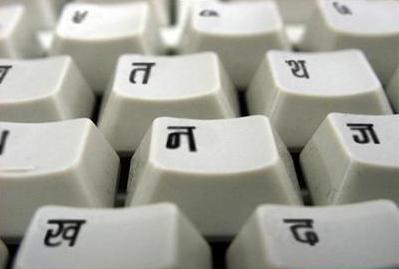
Users can type directly with a Devanagari keyboard layout, use transliteration tools that convert Latin characters into Nepali, or use smartphone keyboards that provide Nepali input, suggestions and corrections.
For developers, however, text input is only the beginning. Applications also need to handle copying, searching, cursor movement, deletion and text comparison correctly.
This is where Unicode normalization can become important. In some cases, visually equivalent text can have different underlying Unicode sequences. Normalization helps software represent equivalent text consistently when processing or comparing it.
Unicode determines which characters a computer is working with, while a font determines how those characters look.
That is why the same Nepali sentence can have a slightly different appearance across websites, phones and operating systems. Different fonts can have different designs while representing the same underlying Unicode characters.
If a selected font does not contain a particular glyph, the system may use a fallback font or display a missing-character symbol.
Why Localization Matters
Supporting Nepali digitally involves more than displaying Devanagari characters.
Software may also need to handle language preferences, numbers, dates, sorting and other regional conventions. Unicode’s Common Locale Data Repository (CLDR) provides standardized locale data that developers and software platforms can use when building localized experiences.
For Nepali users, this can improve everything from websites and mobile apps to operating-system interfaces and digital services.
Why Nepali Language Computing Matters
For developers building products for Nepali-speaking users, proper language support cannot stop at adding a Nepali keyboard.
Applications need to store, display, search and process Nepali text reliably. Poor handling of Unicode or Devanagari shaping can result in broken characters, incorrect search results or text that behaves unexpectedly.
As more communication, education, business and public services move online, reliable Nepali Language Computing becomes increasingly important. It helps ensure that language is not a barrier to using digital technology.
Conclusion
Understanding how technology handles Devanagari text reveals how much happens behind a simple Nepali sentence on a screen.
Unicode provides the standard representation, fonts provide the visual appearance, and text-shaping systems ensure that complex Devanagari combinations are displayed correctly. For users, the process should remain almost invisible. For developers, it is an essential part of building technology that genuinely supports Nepali.
External Sources/Links
-
— Official technical documentation covering Devanagari characters, combining behavior and rendering.
-
— Explains why Unicode normalization matters when software compares and processes text.
-
— Official information about locale data used by operating systems and applications.
-
— Confirms Nepali’s language and Devanagari script association.
FAQs
What is Nepali Language Computing?
Nepali Language Computing covers the technologies that allow computers and digital services to input, store, process, display and search Nepali text.
Why does Nepali use Unicode?
Unicode provides a standardized way to represent Nepali characters, allowing text to be exchanged between different devices, applications and platforms.
Why does Devanagari require text shaping?
Devanagari uses combining marks and consonant combinations whose visible forms can change depending on their context. Text-shaping systems arrange these elements correctly for display.
What is Unicode normalization?
Unicode normalization converts equivalent Unicode sequences into a standardized representation, helping software compare and process text consistently.
Is Devanagari the same as Nepali?
No. Devanagari is a writing script, while Nepali is a language. Nepali uses Devanagari, but the same script is also used for several other languages.