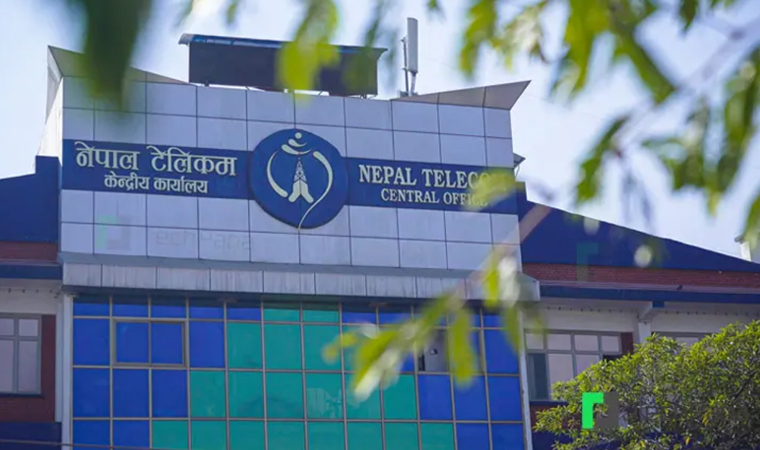
Nepal Telecom is preparing to expand its mobile network by adding 200 new mobile towers and extending 4G services to 1,597 locations across the country this fiscal year.
Speaking during a meeting of the House of Representatives, Communications Minister Dr. Bikram Timilsina said the government is prioritizing improvements to telecommunications services, network infrastructure and power backup systems to make telephone and internet services more reliable and accessible.
200 New Mobile Towers Planned
According to Minister Timilsina, Nepal Telecom’s plan to construct 200 new mobile towers is currently at the tender evaluation stage.
The expansion is aimed at improving mobile network coverage and service quality, particularly in areas where telecommunications services remain limited.
The minister said the government has also directed Nepal Telecom to prepare a detailed action plan to address network problems caused by inadequate electricity supply and insufficient backup power at some tower sites.
4G Expansion to 1,597 Locations
Nepal Telecom is also preparing to deploy the necessary equipment to operate 4G services at 1,597 locations across the country.
Minister Timilsina said the tender for the required equipment is expected to be published this week.
The government has described the current fiscal year as a “transformation year” for the telecommunications sector, with a focus on expanding mobile services, improving network quality and making services more reliable.
Nepal Telecom Increasing Tower Backup Power
Power outages can disrupt mobile services, particularly in rural areas where many telecom sites depend heavily on backup systems.
To address this issue, Nepal Telecom has been upgrading battery backup capacity at its towers across the country.
According to Minister Timilsina, batteries have already been replaced at more than 600 locations across all seven provinces over the past three months.
With the upgraded backup systems, telecom services can reportedly continue for around 8 to 10 hours in rural areas and 4 to 6 hours in urban areas during electricity outages.
Nepal Telecom currently has around 500 batteries in stock and plans to upgrade backup systems at the required locations within the next three months. The company is also in the process of purchasing an additional 200 batteries through a tender process.
Solar-Powered Telecom Sites to Get Upgrades
Nepal Telecom also operates solar-powered sites in areas where access to the national electricity grid is limited.
Minister Timilsina said the tender agreement for upgrading the power backup and solar systems at 32 existing solar sites is currently being processed.
The government is also coordinating with the Ministry of Energy to connect these solar-powered telecom sites to the national electricity transmission network wherever possible.
Telecom Infrastructure Facing Theft and Damage
According to the minister, telecom infrastructure located outside the national electricity grid has also been affected by theft and physical damage.
Batteries, equipment and cables connecting batteries at some Nepal Telecom solar sites have reportedly been stolen. Some towers have also suffered physical damage.
The minister said such incidents have repeatedly disrupted telecommunications services and warned that those responsible for damaging or stealing telecom infrastructure would face legal action.
Bhotekoshi Flood Caused More Than Rs. 88.5 Million in Damage
The minister also provided details about damage caused to Nepal Telecom’s infrastructure by the Bhotekoshi flood.
According to the information presented to Parliament, the flood caused approximately Rs. 88.5 million (Rs. 8 crore 85 lakh 12 thousand 685) in damage to Nepal Telecom’s mobile, wireline and backbone transmission systems.
Of the 120 telecom sites located across Rasuwa, Nuwakot and Dhading, services at 83 sites were disrupted by the flood.
Three sites — Trishuli-3B, Chilime Khola and Timure — were completely destroyed.
Apart from those three sites, Nepal Telecom has restored the other disrupted services, according to the minister. Although the three completely damaged sites could not immediately be rebuilt, alternative towers were deployed at necessary locations to maintain mobile network coverage.
At the Timure site, a solar system was installed using a helicopter, allowing the service to resume.
37.9 Kilometers of Fiber Network Damaged
The flood also damaged Nepal Telecom’s fiber infrastructure.
Out of a total 65.3 kilometers of fiber network in Rasuwa, Nuwakot and Dhading, approximately 37.9 kilometers were damaged by the flood.
Nepal Telecom has already repaired around 27.4 kilometers of the damaged fiber network.
The flood also completely damaged three Optical Line Terminals (OLTs) in Rasuwa and Nuwakot, while parts of the FTTH network were also affected. According to the minister, most of the damaged OLTs have since been recovered and services restored.
Backbone Network Restored Through Microwave Technology
Telecom infrastructure in the Timure and Rasuwagadhi areas was also damaged, affecting both fiber and microwave systems.
To restore backbone transmission services, Nepal Telecom has temporarily switched to microwave technology instead of fiber in the affected areas.
The move has helped maintain connectivity while damaged infrastructure is being repaired.
Nepal Telecom Focuses on Network Expansion
The government’s plans to add 200 mobile towers, expand 4G coverage to 1,597 locations and upgrade backup power systems are part of a broader effort to improve Nepal’s telecommunications infrastructure.
With increasing dependence on mobile internet and digital services, reliable network coverage and resilient telecom infrastructure remain important, particularly in remote and disaster-prone areas.
Source: Based on information presented by Communications Minister Dr. Bikram Timilsina in the House of Representatives.