Why do smartphones have multiple camera lenses? Learn how wide, ultrawide, telephoto and other lenses give phones more photography options.
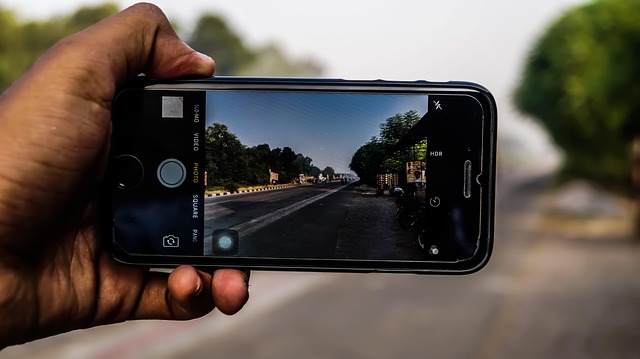
Have you ever looked at the back of a modern Smartphone and wondered why it has three or four camera lenses? If one camera can take photos, why does a phone need so many?
The reason is actually pretty practical. Each lens is designed to handle a different type of shot. Instead of asking one tiny camera system to do everything, phone makers combine several cameras to give you more flexibility.
Why Do Smartphones Have Multiple Cameras?
Different lenses give a phone different focal lengths and fields of view.
A typical multi-camera phone might have a main camera for everyday photos, an ultrawide camera for capturing more of a scene, and a telephoto camera for photographing subjects farther away.
This approach is partly about physics. Smartphones are thin, so there is limited space for large lenses and moving optical components. Using several smaller camera systems allows manufacturers to offer different perspectives without making the phone much thicker.
What Does Each Camera Do?
Main Camera
The main camera is usually the one you’ll use most often. It’s designed to handle everyday photos such as people, food, pets, streets, and landscapes.
Manufacturers often put considerable effort into the main camera’s sensor, lens, autofocus, stabilization, and image processing because it is the primary camera for many users.
Ultra-Wide Camera
An ultrawide camera lets you fit much more into a single frame.
It’s especially useful when you’re photographing:
-
A large landscape
-
A group of people
-
A tall building
-
A small room
-
Architecture or city scenes
For example, if you are standing close to a building and can’t physically move farther away, an ultrawide lens can help you capture more of it.
Telephoto Camera
A telephoto camera is useful when your subject is far away. Its longer focal length provides optical magnification, so you don’t have to rely entirely on digital zoom.
This can be handy for photographing distant buildings, performances, sports, wildlife, or portraits.
Some smartphones use a folded or periscope-style lens design to provide longer focal lengths while keeping the phone relatively thin.
Macro and Other Cameras
Some phones also include a dedicated macro camera for close-up photography. Others may have additional sensors designed to help with depth information or specialized imaging features.
However, not every phone needs a separate camera for every function. Modern image-processing software can handle some tasks without dedicated hardware.
How Do Multiple Cameras Work Together?
The different cameras aren’t always working separately.
When you change the zoom level, your phone may switch from one camera to another. The software can also combine information from multiple cameras and use computational photography to improve the final image.
For example, the phone might use its main camera at one zoom level and switch to a telephoto camera when you zoom farther in. The transition and processing are handled by the phone’s software, often without you needing to think about which lens is being used.
This is also why the number of cameras doesn’t tell the whole story. Two phones with the same number of lenses can produce very different results.
Why Not Just Use Digital Zoom?
Digital zoom mainly enlarges or crops the image rather than providing additional optical magnification.
A telephoto camera uses a longer focal length to bring distant subjects closer optically. Modern smartphones combine optical cameras with software processing, so today’s zoom systems can use both optical and computational techniques.
In simple terms, having a dedicated telephoto camera gives the phone more physical information to work with before software processing is applied.
Does More Cameras Mean Better Photos?
Not necessarily.
A phone with four cameras isn’t automatically better than one with two. The quality of the sensors and lenses, autofocus, stabilization, image processing, software, and even how well the cameras work together can make a much bigger difference.
Think of multiple cameras as giving a phone more options, rather than automatically making every photo better.
Conclusion
The reason Smartphone cameras have multiple lenses is simple: different lenses are good at different jobs.
The main camera handles everyday photography, an ultrawide camera captures more of the scene, and a telephoto camera helps photograph distant subjects. When these cameras are combined with modern computational photography, a small smartphone can offer a surprisingly flexible Camera system.
So, the next time you see several lenses on the back of a phone, remember that they aren’t simply there for decoration. Each one can give your phone a different way to see the world.
External Sources/Links
FAQs
Why do smartphones have three cameras?
Three cameras can provide different focal lengths and fields of view, such as main, ultrawide, and telephoto photography.
Is a telephoto camera better than digital zoom?
A telephoto camera provides optical magnification through its lens, while digital zoom primarily relies on cropping and computational processing. The final result depends on the phone’s hardware and software.
What is an ultrawide camera used for?
An ultrawide camera captures a wider field of view, making it useful for landscapes, architecture, groups, and tight spaces.
Does more megapixels mean a better smartphone camera?
No. Megapixel count is only one part of camera performance. Sensor size, lens quality, stabilization, autofocus, processing, and software also matter.